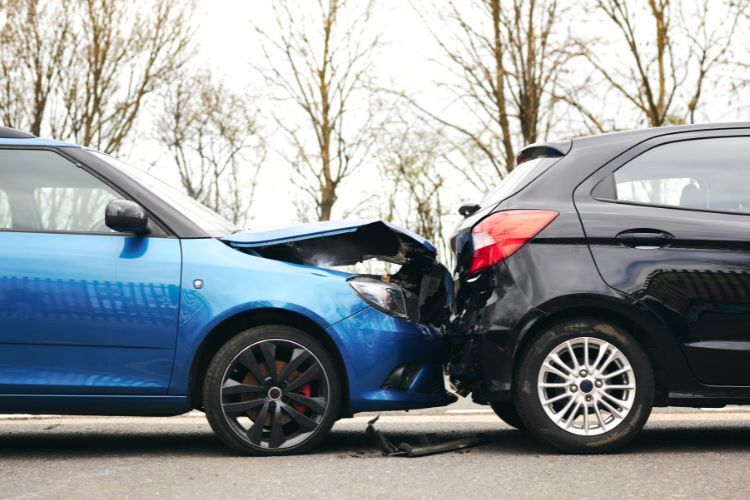
A car accident doesn't just shake you up in the moment. It can leave your body dealing with stiffness, pain, and restricted movement for weeks or months afterward. Whether it was a minor fender-bender or something more serious, massage therapy after a car accident is one of the most effective, and most underused, parts of a recovery plan. At Trikinetic Massage Therapy Clinic in East Vancouver, we see this often: clients who assume rest alone will resolve the tightness in their neck and shoulders, only to find it lingers far longer than expected.
Here's what's actually happening in your body after a collision, and how registered massage therapy (RMT) can help you recover more fully.
Why Accidents Affect the Body More Than You'd Expect
Even low-speed collisions generate enough force to strain muscles, ligaments, and connective tissue, especially in the neck, upper back, and shoulders. This is where whiplash comes in. The rapid back-and-forth motion of a crash can overstretch soft tissue before your body has a chance to brace for it.
The tricky part is that whiplash and soft-tissue injuries don't always announce themselves right away. Adrenaline can mask pain for the first day or two, and swelling or muscle guarding often builds gradually over the following week. A stiff neck that feels manageable on day one can turn into a genuinely limited range of motion by day four. That's part of why massage for whiplash is commonly recommended even when initial X-rays come back clear. The injury is happening in the soft tissue, not the bone, so imaging often looks fine while the muscles and connective tissue are still inflamed and guarded.
How Massage Therapy Helps the Healing Process
A skilled RMT isn't just working out knots. After an accident, treatment is focused on a few specific goals. It reduces muscle guarding, which is the body's protective tightening around an injury that can restrict movement if it isn't addressed. It improves circulation to the affected area, supporting the body's natural healing response. It helps break up early scar tissue and adhesions before they limit range of motion long-term. And over time, it restores mobility in the neck, shoulders, and back gradually and safely.
This is why injury recovery massage tends to work best as part of an ongoing plan rather than a single visit. Early sessions are often gentler, focused on calming an overactive nervous system and reducing inflammation. As healing progresses, techniques shift toward restoring full movement and strength. A client who comes in during week one will likely have a very different session than the same client in week six, and that progression matters.
What to Expect at Your First Appointment
If you're coming in after a collision, your RMT will start with a conversation about how the accident happened, where you're feeling pain or restriction, and what's changed in your daily movement since. This matters. A rear-end collision and a side-impact crash create different injury patterns, and treatment should reflect that. Someone who was rear-ended at a stoplight often carries tension differently than someone involved in a side-impact collision at an intersection.
From there, expect a treatment plan tailored to your specific injury, not a one-size-fits-all approach. Many clients are surprised by how much massage therapy for car accident recovery can reduce their reliance on pain medication, simply by addressing the root tightness and inflammation directly rather than just managing the symptoms.
Does ICBC Cover Massage Therapy After an Accident?
If you're in British Columbia, this is usually the first question people ask, and the answer is often yes. ICBC massage therapy coverage is available for many accident claims, meaning your recovery sessions may be covered without significant out-of-pocket cost, depending on your claim details.
The process usually involves three steps. First, you open a claim with ICBC after your accident. Second, in many cases you'll need a referral or documentation from your doctor. Third, you book with a registered massage therapist who can bill directly or provide documentation for your claim.
Coverage details vary by claim, so it's worth checking directly with ICBC or asking your clinic what documentation they need on file.
Why Timing Matters
One thing we tell East Van clients often: don't wait for pain to become unmanageable before booking a session. Soft tissue that isn't mobilized can tighten further, and movement patterns can compensate around an injury in ways that create secondary problems. A stiff neck today can turn into shoulder or upper-back tension a few weeks later if it's left unaddressed, simply because you've unconsciously changed how you sit, sleep, or turn your head to avoid discomfort.
That said, timing should always be guided by your doctor, especially in the first 24 to 72 hours after a more serious collision. Once you've been cleared for manual therapy, earlier treatment generally supports a smoother, faster recovery. Waiting months to address a soft-tissue injury usually means a longer road back to full mobility than starting treatment within the first couple of weeks.
Recovering in East Vancouver
Trikinetic Massage Therapy Clinic has supported Commercial Drive and East Van clients through accident recovery for years, and we know that every case looks a little different. Whether you're dealing with whiplash, tension from bracing during impact, or general soft-tissue soreness that hasn't let up, our registered massage therapists build a plan around your specific accident and how your body is responding to it.
If you've been in a car accident recently, even one that felt minor at the time, it's worth getting assessed sooner rather than later. Book a registered massage therapy session at Trikinetic today, and let's start your recovery plan.

.jpg)

